粒径更小、分布更均匀——揭秘玉研新一代肺部给药装置的突破性升级
2026-05-27 11:35:33, 玉研仪器 上海玉研科学仪器有限公司


随着吸入制剂、核酸药物、纳米递送及呼吸系统疾病研究的快速发展,肺部给药技术在实验动物研究中的应用越来越广泛。

相比传统全身给药方式,肺部给药能够使药物直接作用于肺组织,提高肺部药物浓度,同时减少全身副作用,因此在COPD、哮喘、肺纤维化、肺感染、急性肺损伤以及肺部肿瘤等研究方向中具有重要意义。
在实验动物肺部给药中,气管滴注一直是较为常见的方法之一。研究人员通常在麻醉状态下,对实验动物进行气管插管后,通过导管将药液缓慢滴入气道,以实现肺部给药。
然而,随着肺部递送研究不断深入,传统气管滴注方式的一些局限性也逐渐显现。研究人员开始越来越关注肺部给药过程中药物颗粒的雾化状态、粒径大小以及肺内分布均匀性。
在给药过程中,研究人员需要将导管插入气管确定位置后,再缓慢推注药液。为了改善药物分布,传统滴注后通常还需要将小鼠直立并进行旋转,使药液尽可能均匀扩散至双肺。这不仅增加了操作复杂度,也延长了实验时间。

由于液体是以“滴入”方式直接进入气道,药液在肺内的分布容易受到重力影响。较大的液滴往往会聚集于某些肺叶或重力侧区域,例如下肺叶,而难以均匀弥散至整个肺部及外周毛细支气管。
这种分布特点会带来多个问题:
药物在肺部呈块状或局部高浓度沉积,与真实自然吸入状态存在较大差异;
不均匀分布也会导致动物之间的暴露差异增加,从而影响实验重复性和结果一致性。
传统滴注方式在剂量控制方面也存在一定挑战。由于动物气道反射或吞咽动作的存在,部分药液可能会被咳出或吞咽进入消化道,导致真正到达肺部的有效药量下降,从而影响实验准确性。
相比传统液滴式滴注,更加均匀、粒径更小的雾化给药方式,能够更接近真实吸入状态,也更有利于药物进入肺深部区域。
传统较大液滴容易停留在近端气道,而粒径更小、分布更均匀的雾化颗粒,则更接近自然吸入暴露状态,更有利于药物在肺内广泛沉积。
对于纳米药物、蛋白药物、核酸药物以及吸入制剂研究而言,这种均匀分布尤为重要。更稳定的肺内分布不仅有助于提高药效评价准确性,也能够降低因局部高浓度沉积带来的刺激或损伤。
针对传统给药方式存在的问题,玉研仪器对肺部给药装置进行了全新升级,对核心给药针头进行了重新设计。

新款针头采用更小外径设计,在插入过程中对气道刺激更小,可有效降低操作损伤,提高插入便利性。
对于小鼠等小型实验动物而言,更细的针头能够减少机械刺激和局部创伤,提高动物耐受性。

小鼠针头
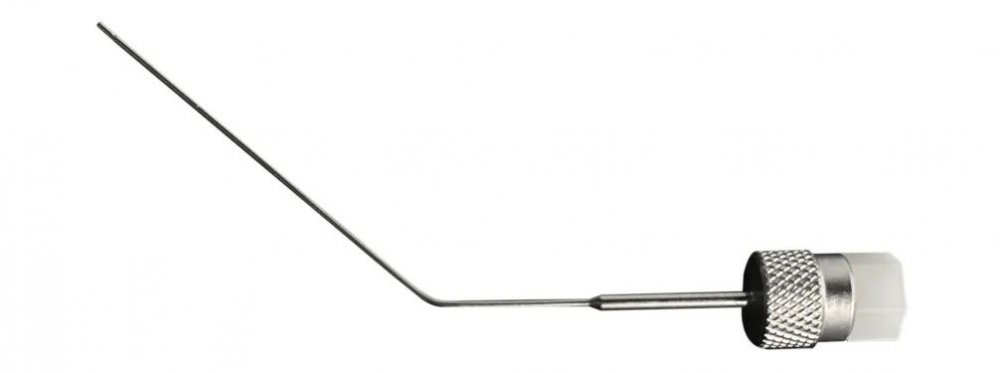
大鼠针头
新款针头进一步优化了雾化效果,雾化粒径从10-30微米升级至8-25微米,产生的雾化颗粒粒径更小。
较小粒径的雾化颗粒更容易进入呼吸末支气管及肺深部区域,提高肺内递送效率,更接近真实自然吸入状态。

除了粒径优化外,新款装置在雾化均匀性方面也进行了提升。药液雾化后能够更加均匀地分布于肺部,有助于降低不同肺叶之间的药物沉积差异,提高实验重复性和一致性。
对于需要高重复性的肺部给药研究而言,更均匀的肺内分布能够为实验结果提供更稳定的基础。
染料分布效果对比:

随着肺部递送研究不断发展,实验动物肺部给药技术也正在从“给得进去”逐渐转向“给得更均匀、更稳定、更接近真实生理吸入状态”。
更小粒径、更均匀分布以及更低损伤的肺部雾化给药技术,将为呼吸系统疾病研究、吸入药物开发及新型递送系统研究提供更加可靠的实验基础。
玉研肺部雾化给药装置已成为全球众多顶尖高校、科研院所及制药企业的标准配置,是高质量研究的设备。

1. Lu, Peng, et al. "Circulating Mitochondrial N-Formyl Peptides Are Associated with Acute Respiratory Distress Syndrome after Cardiopulmonary Bypass and Regulate Endothelial Barrier through FPR2." American Journal of Respiratory Cell and Molecular Biology 72.5 (2025): 533-550.
DOI: 10.1165/rcmb.2024-0076OC
2.Zhang, Chenghao, et al. "Emodin nanocrystals enhanced mucus penetration and ameliorated bleomycin-induced pulmonary fibrosis by pulmonary delivery." Journal of Drug Targeting (2025): 1-11.
DOI: 10.1080/1061186X.2025.2497369
3. Yan, Jiahui, et al. "Effects of Simiao Pill on rheumatoid arthritis complicated with interstitial lung disease via the ATX/LPA/LPA1 and RhoA/ROCK2 signaling pathways." (2025).
DOI: 10.21203/rs.3.rs-6597839/v1
4. Xu, Siqi, et al. "Identification and characterization of a broadly neutralizing and protective nanobody against the HA1 domain of H5 avian influenza virus hemagglutinin." Journal of Virology 99.5 (2025): e02090-24.
DOI: 10.1128/jvi.02090-24
5. Xu Y, et al. "Multifunctional Gold Nanoclusters for a Lung Tissue Distribution Study of a Novel Anti-asthma Inhaled Antibody. " Anal Chem. 2025 Sep 16;97(36):19635-19653.
DOI: 10.1021/acs.analchem.5c03043
6. Wang B, et al. "A softness zwitterionic micelles efficiently deliver inhaled nintedanib by enhancing airway mucus penetration. " Sci Adv. 2026 Jan 2;12(1):eady1030.
DOI: 10.1126/sciadv.ady1030
7. Yang Y, et al. "Preparation, characterisation and pharmacokinetics evaluation of dry power inhalation formulations of polymyxin B. " Pharm Dev Technol. 2025 Feb;30(2):177-185.
doi: 10.1080/10837450
8.Pan, Tingyu, et al. "Identification of potential mechanisms of Schisandrin B in the treatment of idiopathic pulmonary fibrosis by integrating network pharmacology and experimental validation." Naunyn-Schmiedeberg''s Archives of Pharmacology (2024): 1-15.
DOI: 10.1007/s00210-024-03605-7
9.Sun, Xiaolin, et al. "GSTP alleviates acute lung injury by S-glutathionylation of KEAP1 and subsequent activation of NRF2 pathway." Redox Biology 71 (2024): 103116.
DOI: 10.1016/j.redox.2024.103116
10.Meng, Qinghe, et al. "Induced pluripotent stem cell-derived mesenchymal stem cells-derived extracellular vesicles attenuate LPS-induced lung injury and endotoxemia in mice." Shock 62.2 (2024): 294-303.
DOI: 10.1097/SHK.0000000000002381
11. Zhu, Chuanda, et al. "An elastase nanocomplex with metal cofactors for enhancement of target protein cleavage activity and synergistic antitumor effect." Chemical Engineering Journal (2024): 149902.
DOI:10.1016/j.cej.2024.149902.
12. Han, Meng-Meng et al. “Inhaled nanoparticles for treating idiopathic pulmonary fibrosis by inhibiting honeycomb cyst and alveoli interstitium remodeling.” Journal of controlled release : official journal of the Controlled Release Society vol. 366 (2024): 732-745. DOI:10.1016/j.jconrel.2024.01.032
13. Zhang, Huizhe, et al. "Integrative analysis of the efficacy and pharmacological mechanism of Xuefu Zhuyu decoction in idiopathic pulmonary fibrosis via evidence-based medicine, bioinformatics, and experimental verification." Heliyon 10.19 (2024).
DOI: 10.1016/j.heliyon.2024.e38122
14. Yeshwante, Shekhar. "SYSTEMS-BASED APPROACH TO DESIGN AND OPTIMIZATION OF TREATMENT FOR PULMONARY INFECTIONS: STRATEGY TO COMBAT ANTIMICROBIAL RESISTANCE." (2024).
15. Chen, Huanjie, et al. "Enhanced secretion of hepatocyte growth factor in human umbilical cord mesenchymal stem cells ameliorates pulmonary fibrosis induced by bleomycin in rats." Frontiers in Pharmacology 13 (2023): 1070736.
DOI: 10.3389/fphar.2022.1070736
16. Wang, Shuo, et al. "Sustainably released nanoparticle-based rhynchophylline limits pulmonary fibrosis by inhibiting the TEK-PI3K/AKT signaling pathway." Translational Lung Cancer Research 12.3 (2023): 427.
DOI: 10.21037/tlcr-22-675
17. Wang, Ping, et al. "Effect of intratracheal instillation of ZnO nanoparticles on acute lung inflammation induced by lipopolysaccharides in mice." Toxicological Sciences 173.2 (2020): 373-386.
DOI: 10.1093/toxsci/kfz234
18. Ma, Julia, et al. "Prophylactic nCMT-3 attenuates sepsis-induced acute kidney injury in association with NLRP3 inflammasome activation and apoptosis." Shock 59.6 (2023): 922-929.
DOI: 10.1097/SHK.0000000000002118
19. Zhang, Huizhe, et al. "Danggui buxue decoction ameliorates idiopathic pulmonary fibrosis through MicroRNA and messenger RNA regulatory network." Evidence‐Based Complementary and Alternative Medicine 2022.1 (2022): 3439656.
DOI: 10.1155/2022/3439656
20. Ba, Xin, et al. "Simiao pill attenuates collagen-induced arthritis and bleomycin-induced pulmonary fibrosis in mice by suppressing the JAK2/STAT3 and TGF-β/Smad2/3 signalling pathway." Journal of Ethnopharmacology 309 (2023): 116274.
DOI: 10.1016/j.jep.2023.116274
21. Santin, Yohan, et al. "Inhalation of acidic nanoparticles prevents doxorubicin cardiotoxicity through improvement of lysosomal function." Theranostics 13.15 (2023): 5435.
DOI: 10.7150/thno.86310
22.CHENG, Zhipeng, et al. "Therapeutic effect of perfluorocarbon aerosol inhalation on lung injury induced by seawater inhalation in rats." ACADEMIC JOURNAL OF CHINESE PLA MEDICAL SCHOOL 44.5 (2023): 508-513.
DOI: 10.3969/j.issn.2095-5227.2023.05.012
23. Feng, Xin et al. “First magnetic particle imaging to assess pulmonary vascular leakage in vivo in the acutely injured and fibrotic lung.” Bioengineering & translational medicine vol. 9,2 e10626. 29 Nov. 2023.
DOI:10.1002/btm2.10626
24. Fan, Weiyang et al. “Naringenin regulates cigarette smoke extract-induced extracellular vesicles from alveolar macrophage to attenuate the mouse lung epithelial ferroptosis through activating EV miR-23a-3p/ACSL4 axis.” Phytomedicine : international journal of phytotherapy and phytopharmacology vol. 124 (2024): 155256.
DOI:10.1016/j.phymed.2023.155256
25. Li, Cheng et al. “Broad neutralization of SARS-CoV-2 variants by an inhalable bispecific single-domain antibody.” Cell vol. 185,8 (2022): 1389-1401.e18.
DOI:10.1016/j.cell.2022.03.009
26. Liu, Chang et al. “An Inhalable Hybrid Biomimetic Nanoplatform for Sequential Drug Release and Remodeling Lung Immune Homeostasis in Acute Lung Injury Treatment.” ACS nano vol. 17,12 (2023): 11626-11644.
DOI:10.1021/acsnano.3c02075
27. Peng, Boya et al. “Robust delivery of RIG-I agonists using extracellular vesicles for anti-cancer immunotherapy.” Journal of extracellular vesicles vol. 11,4 (2022): e12187. DOI:10.1002/jev2.12187
28. Yang, Guang, et al. "Noncovalent co-assembly of aminoglycoside antibiotics@ tannic acid nanoparticles for off-the-shelf treatment of pulmonary and cutaneous infections." Chemical Engineering Journal 474 (2023): 145703.
DOI:10.1016/j.cej.2023.145703.
29. Sun, Han et al. “Application of Lung-Targeted Lipid Nanoparticle-delivered mRNA of soluble PD-L1 via SORT Technology in Acute Respiratory Distress Syndrome.” Theranostics vol. 13,14 4974-4992. 4 Sep. 2023,
DOI:10.7150/thno.86466
30. Yue, Dayong et al. “Diesel exhaust PM2.5 greatly deteriorates fibrosis process in pre-existing pulmonary fibrosis via ferroptosis.” Environment international vol. 171 (2023): 107706. DOI:10.1016/j.envint.2022.107706
31. Zhang, Mengjun et al. “Airway epithelial cell-specific delivery of lipid nanoparticles loading siRNA for asthma treatment.” Journal of controlled release : official journal of the Controlled Release Society vol. 352 (2022): 422-437.
DOI:10.1016/j.jconrel.2022.10.020
32. Gu, Peiyu et al. “Protective function of interleukin-22 in pulmonary fibrosis.” Clinical and translational medicine vol. 11,8 (2021): e509.
DOI:10.1002/ctm2.509
33. Wu, Lan et al. “Poly(lactide-co-glycolide) Nanoparticles Mediate Sustained Gene Silencing and Improved Biocompatibility of siRNA Delivery Systems in Mouse Lungs after Pulmonary Administration.” ACS applied materials & interfaces vol. 13,3 (2021): 3722-3737. DOI:10.1021/acsami.0c21259
34. Tian, Xidong et al. “Pulmonary Delivery of Reactive Oxygen Species/Glutathione-Responsive Paclitaxel Dimeric Nanoparticles Improved Therapeutic Indices against Metastatic Lung Cancer.” ACS applied materials & interfaces vol. 13,48 (2021): 56858-56872. DOI:10.1021/acsami.1c16351
35. Lin, Wei-Ting et al. “Modulation of experimental acute lung injury by exosomal miR-7704 from mesenchymal stromal cells acts through M2 macrophage polarization.” Molecular therapy. Nucleic acids vol. 35,1 102102. 14 Dec. 2023.
DOI:10.1016/j.omtn.2023.102102
36. Yang, Huilin et al. “Triptolide dose-dependently improves LPS-induced alveolar hypercoagulation and fibrinolysis inhibition through NF-κB inactivation in ARDS mice.” Biomedicine & pharmacotherapy = Biomedecine & pharmacotherapie vol. 139 (2021): 111569. DOI:10.1016/j.biopha.2021.111569
37. Feng, Xin et al. “First magnetic particle imaging to assess pulmonary vascular leakage in vivo in the acutely injured and fibrotic lung.” Bioengineering & translational medicine vol. 9,2 e10626. 29 Nov. 2023,.
DOI:10.1002/btm2.10626
38. Xiao, Xue et al. “SerpinB1 is required for Rev-erbα-mediated protection against acute lung injury induced by lipopolysaccharide-in mice.” British journal of pharmacology vol. 180,24 (2023): 3234-3253.
DOI:10.1111/bph.16175
39. Su, Ruonan et al. “Venetoclax nanomedicine alleviates acute lung injury via increasing neutrophil apoptosis.” Biomaterials science vol. 9,13 (2021): 4746-4754. DOI:10.1039/d1bm00481f
40. Xu, Yingying et al. “PEGylated pH-responsive peptide-mRNA nano self-assemblies enhance the pulmonary delivery efficiency and safety of aerosolized mRNA.” Drug delivery vol. 30,1 (2023): 2219870.
DOI:10.1080/10717544.2023.2219870
41. Wu, Yanqi et al. “SN50 attenuates alveolar hypercoagulation and fibrinolysis inhibition in acute respiratory distress syndrome mice through inhibiting NF-κB p65 translocation.” Respiratory research vol. 21,1 130. 27 May. 2020。
DOI:10.1186/s12931-020-01372-6
42. Chen, Huanjie et al. “Enhanced secretion of hepatocyte growth factor in human umbilical cord mesenchymal stem cells ameliorates pulmonary fibrosis induced by bleomycin in rats.” Frontiers in pharmacology vol. 13 1070736. 6 Jan. 2023.
DOI:10.3389/fphar.2022.1070736
43. Han, Meishan et al. “Engineering of Stimulus-Responsive Pirfenidone Liposomes for Pulmonary Delivery During Treatment of Idiopathic Pulmonary Fibrosis.” Frontiers in pharmacology vol. 13 882678. 25 Apr. 2022.
DOI:10.3389/fphar.2022.882678
44. Cai, Zimin, et al. "Enhanced protective activity of 1, 8-cineole on emphysema using hyaluronic acid-coated liposomes via quantitative pulmonary administration in mice." Journal of Drug Delivery Science and Technology 72 (2022): 103402.
DOI:10.1016/j.jddst.2022.103402
45. Wu, Lan, et al. "Quantitative comparison of three widely-used pulmonary administration methods in vivo with radiolabeled inhalable nanoparticles." European Journal of Pharmaceutics and Biopharmaceutics 152 (2020): 108-115.
DOI:10.1016/j.ejpb.2020.05.004
46. Peng, Jianqing et al. “Carboxymethyl Chitosan Modified Oxymatrine Liposomes for the Alleviation of Emphysema in Mice via Pulmonary Administration.” Molecules (Basel, Switzerland) vol. 27,11 3610. 4 Jun. 2022.
DOI:10.3390/molecules27113610
47. Chen, Huanjie et al. “Enhanced secretion of hepatocyte growth factor in human umbilical cord mesenchymal stem cells ameliorates pulmonary fibrosis induced by bleomycin in rats.” Frontiers in pharmacology vol. 13 1070736. 6 Jan. 2023.
DOI:10.3389/fphar.2022.1070736
48. Wang, Ping et al. “Effect of Intratracheal Instillation of ZnO Nanoparticles on Acute Lung Inflammation Induced by Lipopolysaccharides in Mice.” Toxicological sciences : an official journal of the Society of Toxicology vol. 173,2 (2020): 373-386.
DOI:10.1093/toxsci/kfz234
49. Meng, Qinghe et al. “Nano-chemically Modified Tetracycline-3 (nCMT-3) Attenuates Acute Lung Injury via Blocking sTREM-1 Release and NLRP3 Inflammasome Activation.” Shock (Augusta, Ga.) vol. 57,5 (2022): 749-758.
DOI:10.1097/SHK.0000000000001927
50. Chen, Ping et al. “Chronic exposure to ampicillin alters lung microbial composition in laboratory rat.” Experimental lung research vol. 49,1 (2023): 116-130.
DOI:10.1080/01902148.2023.2219790

自研核心,铸就非凡实力
上海玉研科学仪器有限公司,作为业内领先的科研设备制造商,自2010年成立以来16年始终秉承创新驱动发展,自研铸就精品”的核心理念,致力于科学仪器的自主研发与生产,目前产品线覆盖实验动物饲养、生理信号采集、神经科学研究等多个科研及应用领域,不仅在常规仪器上不断优化升级,更勇于探索前沿技术,推出了一系列具有自主知识产权的高端科学仪器。
公司研发人员占比40%,拥有传感器、芯片设计、核心算法等科学家团队,在产品落地与运营,市场与学术推广,综合产品方案设计与应用等方面均有专业的团队提供支持,公司拥有可覆盖全国的服务点,技术服务能力强大,客户涵盖清华大学、北京大学、浙江大学、上海交通大学、中国科学院大学、四川大学华西医院、北部战区总医院等国内外一流研究机构、医院。

08-06 市场部
专业之选 · 一站配齐 | Ellutia 色谱全线产品08-06 Ellutia
从一粒沙到一颗芯:LAUDA 如何用精准温控守护半导体未来08-06 LAUDA_China
Nature子刊|覆盖18大器官!同济大学田志新教授首次绘制人类器官N-糖蛋白全景图谱08-06
水汇青城,圆满落幕——北裕仪器“黑灯实验室”构建智慧监测新生态08-06
国仪量子扫描电镜助力岩爆防控!SEM3200揭示微波卸压下花岗岩损伤机制08-05 CIQTEK
低空经济起飞,测试如何跟上?《德思特低空经济发展白皮书》:洞察前沿趋势,解码落地方案08-05 德思特
肌苷的分析 参考《中国药典》(2025年版)二部08-05 YoYo老师
梅罗仰望的“千球大关”,三英精密已交卷!08-05
同样的设备,一个选原厂,一个选第三方——差距有多大?08-05
安图的“第一”系列 | 破解微生物药敏检测难题,打通精准诊疗“高速路”08-05 小安
TA FAQs【19】| TMA的微分曲线(DTMA曲线)代表什么?它又有哪些用途呢?08-05 日立分析仪器
直播邀约丨实例剖析七位半数字多用表的调整及验证过程08-05
有奖答题 |看不见的风险,你能提前发现吗?08-05
专家课堂 | 公司电脑USB全封?告别数据线,热像仪图片这样秒传!08-05
应用案例 | Fluke 2082定位仪查找地下铠装光缆08-05
积分商城 | 7月积分兑换名单08-05
一针致命!雅诗兰黛高管医美填充离世警示:填充剂微粒质控是生命防线08-04
产品推荐 | 让微弱脉冲信号更清晰——锁相放大器集成Boxcar平均器08-04 赛恩科仪
十一载薪火共振,深耕自旋新程|2026年EPR高级研讨班成功举办08-04 CIQTEK